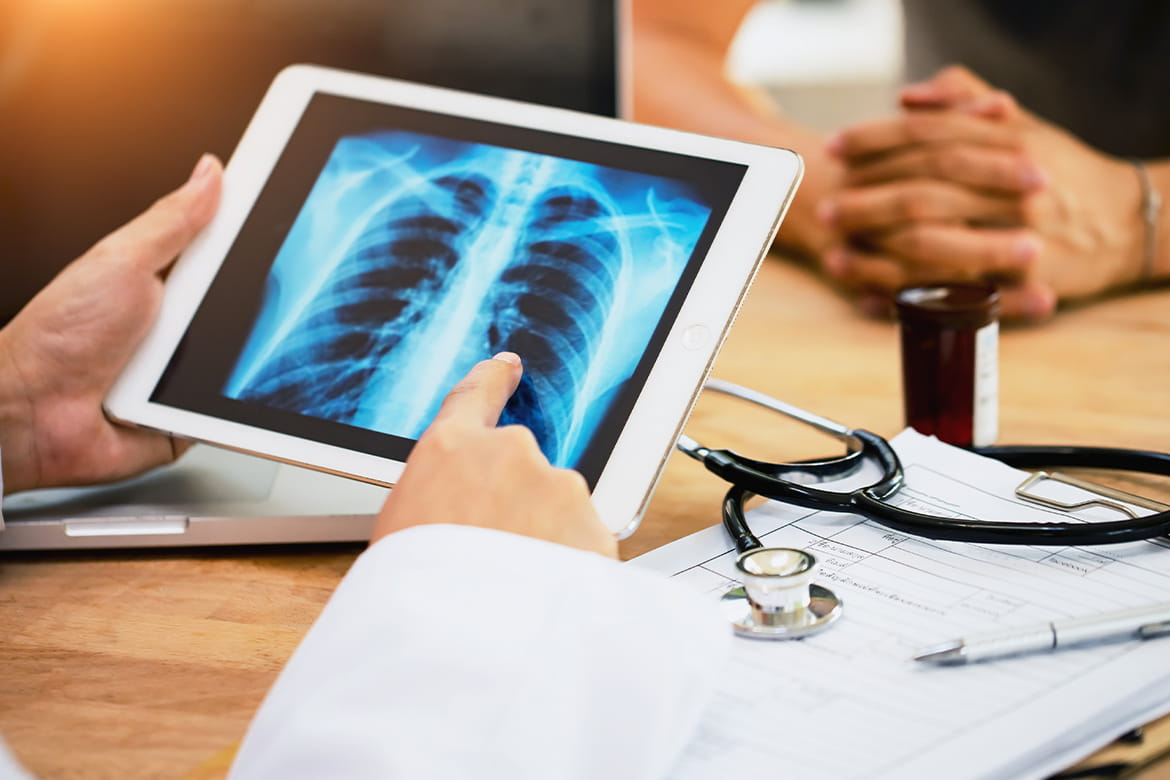
Your lungs play a vital role in keeping your body healthy. When breathing becomes difficult or you experience symptoms such as wheezing, coughing or shortness of breath, pulmonary and asthma screenings can help identify the cause and guide the right treatment.
At Banner Health, our pulmonary specialists use advanced testing to measure how well your lungs are working and to detect or monitor conditions like asthma, chronic obstructive pulmonary disease (COPD), and other breathing disorders.
Your doctor may recommend pulmonary testing to:
Our goal is not only to understand how your lungs perform but also to look at other factors that may affect your breathing, including allergies, gastrointestinal reflux or sinus conditions. Breathing problems can also impact your sleep quality, energy and daily activity, which is why your provider may recommend a sleep study if nighttime breathing issues are suspected.
Banner Health offers a full range of noninvasive and minimally invasive tests to assess your breathing and lung health.
Allergies often contribute to asthma flare-ups and chronic respiratory problems. We offer:
Understanding your allergy triggers helps your provider design a treatment plan that reduces inflammation and prevents asthma attacks.
Learn more about allergy testing.
Pulmonary function tests evaluate how much air you can inhale and exhale and how efficiently your lungs move oxygen into your blood.
Common PFTs include:
Additional specialized testing may measure airway resistance or respiratory muscle strength, helping your doctor identify specific types of lung dysfunction.
Exercise testing evaluates how your heart, lungs and muscles work together during physical activity. It helps your care team understand your fitness level and how your body responds to stress.
Types of exercise testing include:
These tests can help guide pulmonary rehabilitation and determine your safe level of activity.
Also known as airway reactivity testing, this test evaluates how sensitive your airways are to specific triggers. It can help confirm or rule out asthma and exercise-induced bronchospasm.
Types include:
Oxygen titration measures how much oxygen your body needs at rest and during activity. Using a pulse oximeter or exercise-based test, we can determine:
This test measures the amount of oxygen, carbon dioxide and acid (pH) in your blood to determine how effectively your lungs exchange gases. A small sample is taken from an artery in your wrist. This test provides valuable insight into your respiratory and metabolic function.
Bronchoscopy is a minimally invasive procedure that allows your doctor to look inside your airways and collect small samples of tissue or fluid for testing. It can help diagnose infection, inflammation or lung disease. Most bronchoscopies are outpatient procedures with a short recovery time.
Your lungs are unique - and so is your care. At Banner Health, we combine advanced diagnostic technology with a multidisciplinary team approach to ensure every patient receives accurate testing and a treatment plan that fits their lifestyle.
Whether you’re experiencing new symptoms or managing a chronic lung condition, we’re here to help you breathe easier.

 Sign in to Patient Account